Sword Uses
How will you use your sword?
Choosing the right sword starts with understanding how you intend to use it. While many swords may appear similar, they are designed with very different purposes in mind. A decorative wall hanger, a battle re-enactment sword, and a HEMA sparring sword are all built to different specifications, each prioritising authenticity, safety, durability or performance.
This guide explains the most common uses for swords and daggers, helping you select a piece that is suitable for your intended purpose. Whether you are looking for a display piece, a historically accurate replica, a practical cutting sword or equipment for martial arts or stage combat, understanding these differences will help you make the right choice and ensure your sword performs as intended.
Display
Display swords and daggers are predominantly designed to look good. They tend to be ornately decorated and in most cases will have shiny, maintenance-free stainless steel blades. They are not usually historically accurate and are not designed to be used in combat. They are also usually suitable for ceremonial use and fancy dress.
Battle Re-enactment
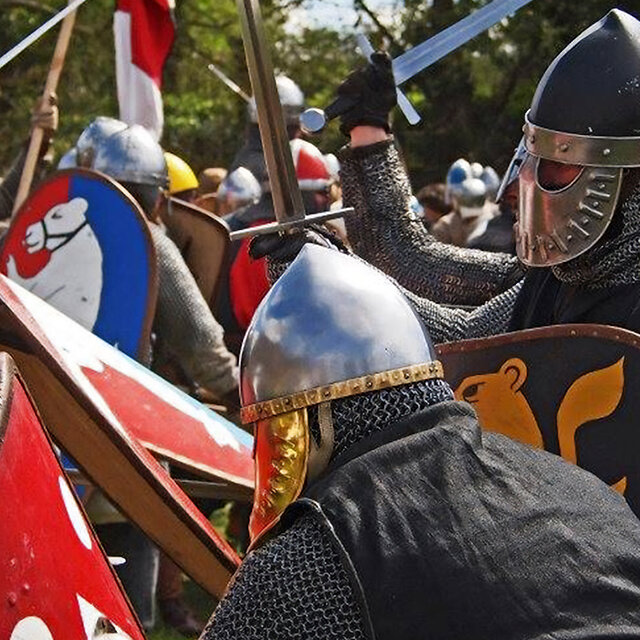
Swords designed for battle re-enactment are built for the rigours of the battlefield and conform to the safety requirements of most re-enactment societies. They feature tempered high-carbon steel blades with 3mm edges and rounded tips. They usually include peened pommels and period-accurate fittings. The thicker blades make them heavier but more durable than real swords of the period.
Please remember that a sword is a tool and is not indestructible. Over time and with prolonged use, fittings can become loose and blades can break, just as their historical counterparts did.
Living History
Swords and daggers designed for living history are made as accurate representations or replicas of period pieces. They usually feature tempered high-carbon steel blades with sharp or sharpenable edges. They often include peened pommels, though some may use historically accurate screw pommels. They feature authentic materials and fittings and are suitable for demonstrations, display, and film work.
They are designed as functional weapons, but this does not mean they are indestructible. Like historical originals, blades may break, notch or become damaged if abused or not properly maintained. For combat use, battle re-enactment or HEMA sparring swords are recommended as they are safer and more durable.
Test Cutting
Swords and daggers designed for test cutting are intended to function like their historical counterparts. They feature tempered high-carbon steel blades that are either supplied sharp or can be sharpened. They are suitable for cutting materials such as water bottles, vegetables and tatami mats.
Most test cutting swords are historically accurate, but not all. If historical accuracy is important, ensure the item is also labelled as suitable for living history.
HEMA Sparring
HEMA sparring swords are designed for full-contact historical European martial arts combat. They typically feature approximately 2mm edges and rolled or thickened tips to spread the impact of thrusts. Rapiers, feders and some sabres may also include flexible blades designed to bend on impact.
They are not always historically accurate but strike a balance between authenticity and safety. These features are specific to sparring swords. HEMA also includes drilling and test cutting. In general, swords suitable for living history, battle re-enactment or stage combat are suitable for most HEMA drilling exercises, but flexible blades with rounded tips are essential for sparring.
Please remember that a sword is a tool and is not indestructible. Over time and with prolonged use, fittings can become loose and blades can break, just as their historical counterparts did.
Stage Combat
Swords and daggers suitable for stage combat must be robust enough for blade-on-blade contact. They feature blunt high-carbon steel blades with 2–3mm edges and may include rounded or reinforced tips. Stage combat rapiers are typically lighter and designed for fast, intense movement.
Longswords and single-handed swords, due to their greater mass, are slower and feel heavier in the hand. It is recommended to consider weight and balance before purchasing.
Please remember that a sword is a tool and is not indestructible. Over time and with prolonged use, fittings can become loose and blades can break, just as their historical counterparts did.